Living in Alberta: A Disabled and Autistic Perspective on Survival, Work, and Politics

Photo by Eriks Abzinovs on Pexels.com

I’ve lived in Alberta for a long time, navigating life after two strokes and cancer, and living with autism. My daughter is disabled too — she has ADHD and rheumatoid arthritis — and together, we experience the world through
resilience, caution, and a lot of care.

Work has been a lifeline for me. I spent 30 years in IT before my strokes and rebuilt a career as a Content Strategist in AI and SaaS, working remotely. My current employer, Auvik, is supportive, inclusive, and recognizes my value. They get disability. They get neurodiversity. They get that people like me can contribute meaningfully when given the right accommodations. For that, I am grateful every day.

Alberta under Danielle Smith and the UCP is making life harder for disabled people and marginalized communities. Policies are actively harmful to the most vulnerable. At the same time, the government likes to point to people like me and my daughter and say, “See? Anyone can work.” That’s not encouragement — it’s weaponization. Our success is being used to justify cutting supports that many people desperately need.

Then there’s the other side: right-wing people who claim we were never disabled, that we “cheated the system” by leaving programs like AISH or Alberta Supports to work. That’s personal. That’s demoralizing. That’s frustrating as hell. So here we are: damned if we do, damned if we don’t. Our existence is used as political proof and we’re harassed for having survived.
Leaving supports behind wasn’t a casual choice. We left because we found opportunities we could actually do. But now, both political rhetoric and online harassment try to rewrite our reality, erasing the challenges we still face.
Being autistic shapes how I experience the world in ways that make all of this harder. Social environments in Alberta are overwhelming and politically charged. Even vacation can’t feel restful. Disability support groups are
often politicized, leaving little neutral space for conversation or understanding. Because I’m not on AISH or ADAP, I’m sometimes seen as “privileged” and excluded from these spaces. Social media is often the only place I can talk — but it’s exhausting, full of rage, and rarely offers calm, relational support that my neurodivergent brain actually needs.

Even on vacation, work feels safer than my own province. At Auvik, I’m valued, accommodated, and recognized. Outside of work, I’m constantly negotiating my identity, survival, and worth in a hostile environment. The anger, frustration, and grief are real. Watching the government attack disabled people while weaponizing my example, personal attacks from individuals claiming I was never disabled, feels unbearable sometimes. It’s a reminder that the system is not designed to protect everyone — only those deemed convenient or politically useful.

Still, we survive. We work. We care for each other. While Alberta may be hostile now, we continue to plan, hope, and explore options for a safer, healthier future — one where dignity, neurodivergence, and human worth aren’t politicized, and where disabled people can exist without being used as evidence for harm.

This is our reality. It’s messy, exhausting, infuriating — and ours to live and to tell.

Autism, Disability, CPP-D, RRSPs and Looking at the Future

This will touch on things that many people might be uncomfortable with but I think employers and employees need to understand. I am going to tell my story and how my life is going now and where it will go in the future – or at least the most likely and least likely outcomes of my story.

First off, you need to know me. I am disabled – most recently in an obvious, people can see I am disabled way and then the ‘silent’ disability that most people didn’t see or understand past me being ‘weird’.

First the silent disability – I am autistic. I am one of the ‘lucky’ ones that because my special interests made me EXTREMELY useful to the companies I worked for, I often had assistance to ‘mask’ beyond the normal masking that autistic folk have to do. I had ‘co-conspirators’ who literally ran interference for me when people would be thinking I was weird – managers who because they valued my computer skills, would help me to deal with things like not dressing as professionally as other companies would expect or giving me an office to hide in and do the things I needed to when everyone else was in a open workspace – even back when such things weren’t the norm.

However, back then I wasn’t diagnosed and wasn’t considered disabled even though I was. The problem with that is for a lot of people, their special interests aren’t ‘marketable’ the way mine are and their autism, ADHD and other ‘silent’ disabilities make it almost impossible to work. In fact, my eldest daughter, who is both autistic and ADHD, gave me statistics on how many folk like her COMMIT SUICIDE because they simply can not work in the normal workplace because they are constantly exhausted not from the work, but being forced to mask and act like they are like normal people. And normal people don’t see this. And then they attack DEI initiatives that help people like us find work and be protected. These are things that right wing politicians and people don’t understand – it’s not just sexual orientation and race issues they are attacking when they attack DEI. They are also attacking disabled people.

Now, I was only classified as disabled after two strokes and cancer. I don’t have a partner (my common-law husband and I split because he was a) cheating and b) wasn’t working or even trying to work – I was the sole breadwinner and he couldn’t even be bothered to get a job or help take care of his daughter – my younger daughter who has ADHD). So the RRSP that I had accumulated was used up surviving before my disability (CPP-D and AISH) was approved.

My youngest wouldn’t have had a chance to even get an post-secondary education if I hadn’t fought back to return to work. Even at the maximum that I was getting (~ 1680 a month) which because AISH was not indexed to inflation was a flat income even though my CPP-D was indexed to inflation – it meant that the only people that was benefiting to the indexation was the Alberta government – they got to send me less money – the AISH portion of that ~ 1680 was about 380 dollars. And again – note – CPP-D is literally MY PENSION that MY CPP contributions from WORKING created – it is NOT a ‘handout’.

When I applied for my CPP-D and got my Canadian Disability Tax Credit, it didn’t help me directly. I wasn’t working at that time. That was also when I found out that I was too old to get the additional money that the government would add to an RDSP. The cut off for that was 50 and you can only contribute to an RDSP until the disabled person is 60. The lady I spoke to at the time, apologized to me.

So within a year of being on CPP-D and AISH, I was bored of not working, I was tired of not being able to afford to live comfortably and I was scared of what would happen to my youngest if she couldn’t get a post-secondary education because she was forced by our circumstance to continue working at a dead end job (Walmart). So I, without asking my social worker, sought out what agencies were available to help me find work. The one that helped me was EmployAbilities. (https://employabilities.ab.ca/). They were thrilled to help me – again I was ‘lucky’. I had a tonne of marketable skills. In my work history, I had years of experience.

That didn’t make it easy.

I went to a LOT of interviews and since my strokes had taken my ability to speak easily – they weren’t interested. Permanent jobs are also not easy to get in Alberta. Albertan employers like to hire contractors. I had done contracting prior to my strokes, and I believe that the stress contracting caused me, contributed to my strokes. So you understand, there are different types of stress – I can handle normal work stress. At TELUS, some types of stress was normal. We had a saying “Everything is always burning and if you think it isn’t burning, smell the air, I bet there’s smoke.” That stress – no problem. Second nature. Stress from contracting – just no. The difference is – am I going to have a job next month? Are they going to cancel the contract? The contract is about to end – do I have to go find another job or will it get renewed? This is the stress that caused my strokes. Again – single mother AND we were taking care of my elderly mother at the time who had serious health issue. I could not afford to not be working. So finding a permanent job in a province OBSESSED with contracting, was no small feat.

The first company that hired me – didn’t work out. The issues were around my disability. I am not going to call them out – but it wasn’t a good place.

I ended up taking a contract. We needed the money. As stressful as it was, the manager I was working for (not the contracting company) was a good lady who as my managers in the past, acknowledged my skills and what I could offer her office. The bad part – it was with the Alberta government and they LIMIT the number of months you can work for them on one contract – and they were only doing three month contracts – so I knew that while I was LIKELY to get a second contract, the government rules meant there wouldn’t be a third one.

Now enters Auvik, my current employer and my mentor in technical writing, who has sadly passed away, Darrel. I had met Darrel contracting with Enbridge prior to my strokes. I had helped him learn about being a business analyst so that he could take on other roles at Enbridge and other places, and he stepped up after my strokes to help me find more work in technical writing; his forte. I’d done some interviews and they hadn’t worked out. He didn’t like how I was being pushed into BA work again. So he was my cheerleader.

Then I got the interview with Auvik (http://www.auvik.com). They loved my IT business analyst, programmer and helpdesk background. They hired me in a week. I love it there. I’m still there and don’t plan on leaving.

So the future looks good right?

Well, yes and no. As long as I Auvik needs me, I am there. I have talked to my director and my job is pretty secure. I always think though – will they need me until I am 70? The older I get, with my health issues, the harder it will be for me to find another job. I just passed my 53rd birthday. So that means I have to maintain a job for another 17 years.

If I do manage to do that, I’ll have about 130k in my RRSP which as long as my CPP (which I am contributing to again) doesn’t get transferred into the ill-thought out Alberta Pension Plan by the Alberta UCP, I will be ok financially. Not incredibly wealthy. Just Ok. That is my ‘best case scenario’.

If things go wrong. I loose my job. Can’t find another job. Well, it depends on when that was to happen.

If the Alberta government was to put my CPP in their APP, knowing they will NOT put forth any protections on it to stop them from using it to prop up their pet projects and would basically decimate it. That is my ‘worst case scenario’.

In that case, if I was unable to work and my CPP was lost to political machinations – my backup plan is to sign my RRSP into another RRSP for my youngest daughter and seek MAID (Medical Assistance In Dying).

And that’s the truly sad thing that I don’t think these politicians think about and in my darker moments I think they don’t even care about it. I am not someone who expects someone else to pay my bills but there seems to be a real lack of caring in both the political class and a lot of normal people these days too.

And the sad thing is that a lot of these normal people would yell that I just don’t want to work (which makes no sense given my story) or that I was wrong but so far I don’t see a lot of caring in the world.


Choice Between Money and Creativity

Photo by Karolina Grabowska on Pexels.com

Why does it always come to this?

Understand that I am not actively searching for a new position, I am still 90% happy at Auvik, but I watch to see if there is a role out there that is even closer to being my perfect dream job. So far there isn’t but there’s been one that might have been close.

Beamdog had/has a role for a senior writer. Amazing right? Creating characters for video games. For a technical writer whose hobbies are roleplaying games (creating new characters is always fun) and video games – that would be next level dream job. I even had a creative project that I did to put on the ol’ resume. The problem … I’m the sole breadwinner for my family and I can’t take a $5500 drop in my pay over the course of a year, especially when the new-for-me van that I bought less than 4 months ago just cost me another $600 because it’s warranty didn’t cover the issue that it developed.

Another role that caught my attention was one with IBM. Technical writer – check. Familiar with Unix – check (My linux skills are actually developed on the fact that when I went to school I was using unix). Top end salary of 130k a year – double check. I applied for this one on a whim but was warned by a friend they are a ‘chew you up and spit you out kind of company’. So the likelihood is I wouldn’t take this job if it was offered anyway.

Now given that I am happy at Auvik why am I looking? Really I’m not. It’s more a see something interesting and go look. Out of the more than dozen I have looked at there’s always something that doesn’t work for me. Expect me to move. Not offering enough money (normally under my current salary with no space to go up). Expect me to come into the office. Or in Alberta the big one is always it’s a short term contract rather than full time. Which means other than the IBM one I haven’t applied to any and I’ve told recruiters No in no uncertain terms.

Oddly enough if I could choose one and not have money be an issue, I would have chosen the Beamdog position.

Your mileage may vary…

Caught Between UPS and Seagate (or When Good Customer Support Agents Take Flack for Bad Processes)

Photo by Tiger Lily on Pexels.com

As a I sit in the chat queue, waiting to see if Seagate will help me for the second time in two days, I felt the need to write. This is another one of my pet peeves, having been a BA and Project Manager in the past – bad processes and when they intersect between two major companies.

This all started on December 22 when I settled in to play Fallout and the harddrive refused to work. I called Seagate and spoke to a support rep that after getting a screenshot of the results from my PC declared the external drive dead and assisted with an RMA. A bit delayed because Christmas, we shipped the drive back to Seagate using a supplied UPS shipping label and waited. I got the confirmation that the package had arrived in Ontario from Edmonton on January 9th, well within the 30 day window for the return, but by January 12th I still didn’t see any indication that Seagate had the drive. On January 15th I was on the phone.

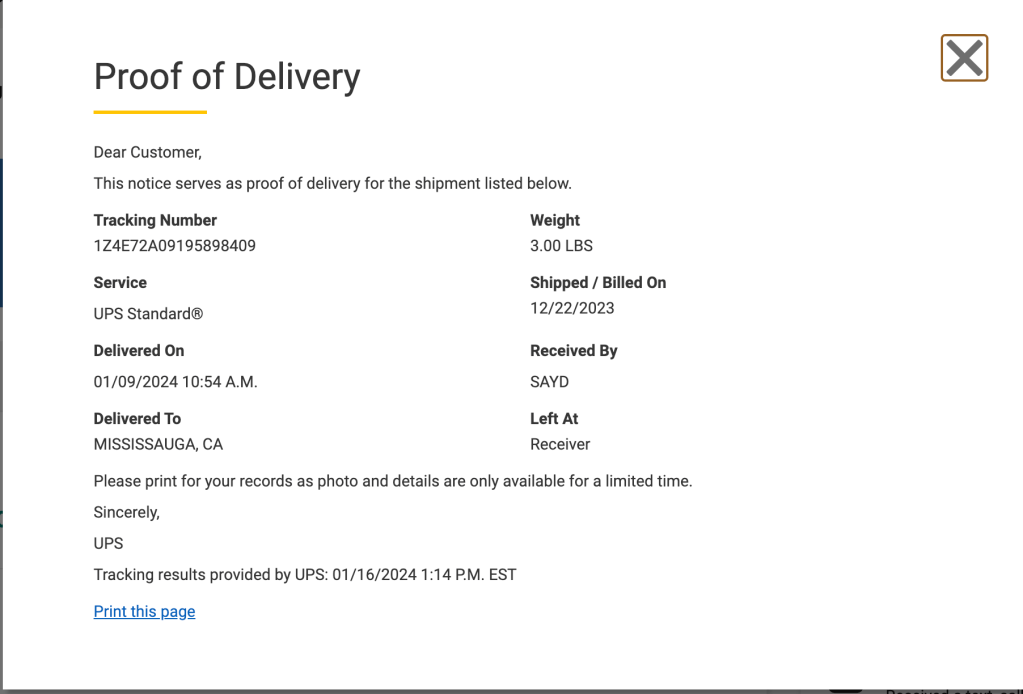
The girl at Seagate warranty was extremely nice, but when I gave her the only confirmation I had…

… I was advised that that wasn’t good enough. The UPS driver had not gotten a photo (which is the correct process that should have been followed) so I would beed to reach out to UPS and get them to send me more documentation.

I then did as asked and reached out to UPS. Unfortunately their chat agents are NOT actual support agents but instead tech support for their website. Not helpful. So I called them and spoke to a girl for which English was her second language (not the issue) but her comprehension of what I was asking for and why seemed to be the actual problem. We had at that point however agreed that she would email me the document that Seagate required in order to do something for my lost defunct hard-drive.

Now remember I am working under a Seagate mandated time frame. The drive had to be back to them within 30 days of issuing the RMA.

So when no email arrived with the document from UPS, today (January 16th) I was on the phone again. Again for about 30 mins. Again a girl promised to email me the document I needed. Again 15 minutes after getting off the phone I still did not have the document.

This time I thought I guess I better submit a claim to UPS for the cost of the drive because it seems that sending me an email was too much to expect.

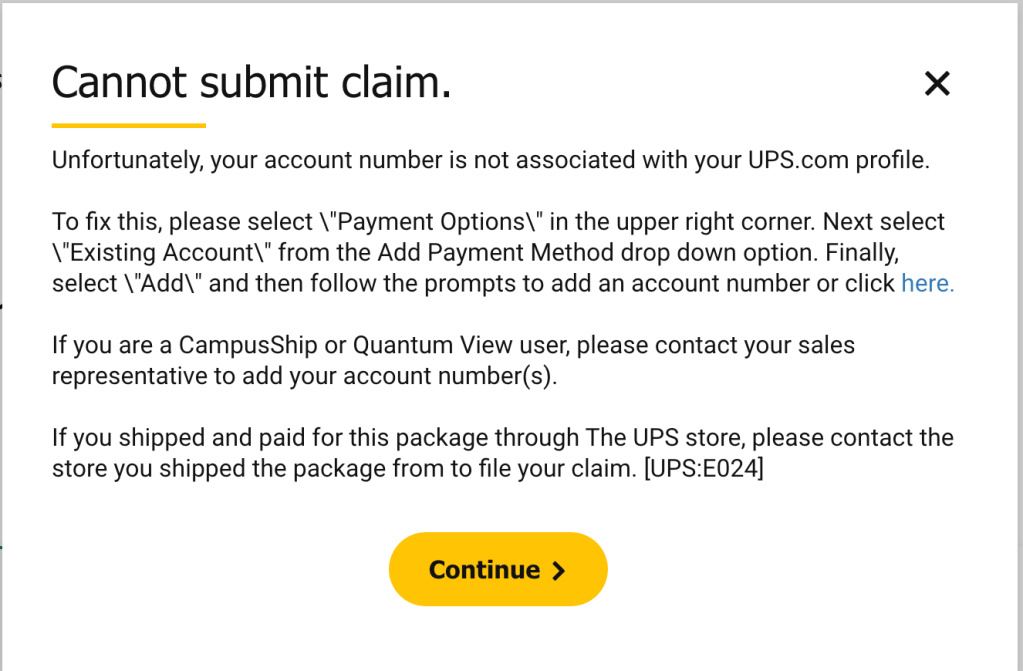
Now the UPS site refused to let me submit the claim – even though I have a UPS account with a credit card attached that they could send the claim through to I get this screen whenever I try to submit…

… To be clear there is no ‘Payment Options’ on the upper right corner of the screen and the Payment Options on my account are set.

During this time the email promised by UPS finally arrived.

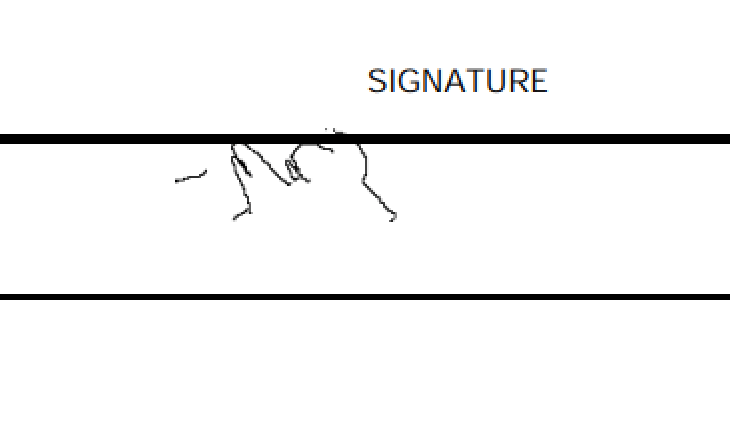
I’m not even worried about the misspelt name, I was just glad that I had the paperwork they wanted. Though the only difference between it and the one available online seemed to be this…

Now it was back to chat with Seagate to talk to a lovely girl named, Carol.

Carol was able to find all the information I had shared with Nicole; the first Seagate Warranty Support girl; so I didn’t have to repeat myself – though another annoyance/failure of technology is that the Seagate Support folk could not open a PDF. Instead I had to open the document and take a screenshot.

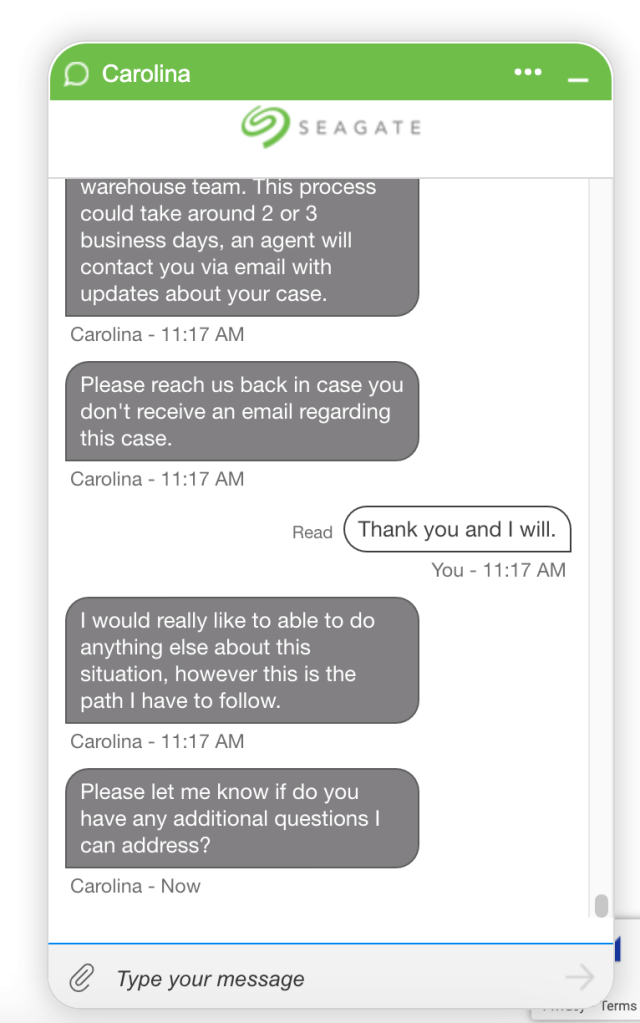
Carol was able to escalate the issue to the next tier of Seagate support, though I am now again waiting for 2 to 3 days with no firm answer.

So at this point if I was a BA writing up a report on this incident, I would identify these points as ‘improvements’ to address…

  1. Ensure that a photo of delivery is taken on BOTH sides of the delivery process – both Seagate AND UPS should be taking pictures, not just one or the other.
  2. Do not use your customer as the middle man to address issues – take ownership of the situation – especially since Seagate SUPPLIED the paid delivery of the failed drive to them. This should be SEAMLESS to the customer.
  3. UPS ensure that your website and your chat support works and sends customers to their right areas of your site. Ensure that instructions are easily followed.
  4. Make certain customers can reach a Manager/Team lead to address issues.
  5. If a customer brings forth an issue, any countdowns like the 30 day timeframe for an RMA should be paused.

Right now, I do not have a solid resolution to my problem. I am still waiting for Seagate to decide what to do and I still have not followed up with UPS to put in a claim (due to their site not working as expected).

It leaves me wondering was it worth it? Was paying the extra money to get a hard drive from a reputable company worth it? Or would I have been better off buying a cheap drive off of Temu or AliExpress or even a less name brand drive that I wouldn’t have even bother trying to replace via the warranty and instead thrown it in the recycling bin?

I’m starting to lean towards the cheap option and that should worry companies like UPS (who does not deliver for Temu/AliExpress or Amazon) and Seagate.

The Advantages of Remote Work and Wondering Why Some Places Seem to Resist It…

Photo by EKATERINA BOLOVTSOVA on Pexels.com

So I have been helping someone get into technical writing – paying forward what my late mentor Darrel did for me. She is a highly technical, former teacher who left teaching due to the cuts from our provincial government. (Reach out if you know a position that she would fit for.) However she lives in Camrose, AB and due to a situation beyond her control, she is stuck there for a year.

The bad thing is there is no work in Camrose. Especially not technical work. So for the moment she’s working at their local casino.

Now a lot of the push back I have seen to remote work is largely around the fact that office towers are empty and it’s affecting the businesses around the office towers. I feel bad about that for the businesses around the office towers, but not nearly as much for the leasing companies that are seeing companies downsizing their tower offices.

From the point of view of a fully remote worker, let me give you the reasons why I will never willingly go back to working in an office.

  • I have mental and physical disabilities that make office work highly stressful and difficult for me that negatively affects my otherwise top notch productivity.

    After two strokes and cancer, I now walk with a cane and can not climb stairs. Even before the strokes, I found stairs extremely difficult to navigate and so when I worked at Enbridge I was on the ‘Wait for fire department to rescue’ list. All the times that I had to wait were practice runs BUT can you imagine the stress if it had been real?

    In the case of the mental disabilities, I am autistic. While my special interests make me extremely good at what I do (writing and computers), I have other autistic traits that do not fit in to a corporate space. My longest running job was with TELUS and there I had managers and a director who recognized the advantages of having me work for them so they helped smooth over whenever my autistic issues would have likely found me loosing my position.

    As an example of that, when I left TELUS, I didn’t hold a position for much longer than a year – except for Enbridge – where my manager there had been at TELUS before and MacEwan – where the position was more of a sequence of 3-5 month stints with breaks in between. I was contracting so turn over is always high, but I can’t help but think that my autism was contributing to that in my case.

    As a remote worker, I am always in my office at home. It is laid out to accommodate my physical disabilities and my mental disabilities like getting distracted by noise or folk coming around and talking to me, as well as the annoying need to have my back to a wall (cube farms don’t work well for me) – well, I have a door on my office at home.
  • Money. Yes, remote work is good money wise. Not because we get paid more, but because I don’t spend as much. I am not tempted to eat out as much. No spending money for gas or for a bus pass.
  • Again money. I lied a little. At least in Alberta, employers here do not value technical writing. I have been offered contracting jobs; which traditionally pay MORE than a full time job; which pay way LESS than what I make as a full time employee before I even get to the additional extras I get like RRSP matching, full healthcare benefits and the $100 a month the company kicks in to pay for the office supplies I need at home.
  • Time. I don’t waste my time running back and forth to work. If I sleep in, I roll out of bed, pull on a t-shirt and jeans and don’t turn on the camera until I’ve brushed my hair instead of having to call my manager to explain why I’m going to be an hour late.

    I also don’t waste company time, chatting with people in the lunch room or at the water cooler. I also can work through boring meetings; turn off my camera, listen to what is being discussed if I am not directly involved and keep on working.
  • Taxes. Yes, working from home helps my taxes (at least here in Canada). I can claim a tax credit for my home office. Since it is a separate room in my house, it’s an easy calculation and it does add up.

Now as I said before I am in Alberta and a lot of Albertan companies seem to be behind the times – which doesn’t surprise me in a way. They believe in this old way of thinking that unless the boss see’s you doing it, you aren’t doing your job.

Employers that is so much horse pucky. If I wasn’t doing my job, I wouldn’t have completely updated the Auvik knowledge base in the first three months of being there when they expected it to take me a year. Then I completely redesigned the knowledge base in the first year, as well as add a tonne of new functionality – did I mention I program too. And that’s not including that I am always adding new articles, as well as adding new documentation for the new products we are adding. At the end of the year, we started an internal knowledge base that I designed and have been helping to organize the content for.

And that is all from the comfort of my home office.

The Importance of Good Technical Documentation

Photo by Kevin Ku on Pexels.com
Blog | Technical Writer | Technical Analyst | Business Analyst | Admin Support Projects | Sample Documents | Home |

Prior to achieving my dream job of being a technical writer, I held a lot of technical positions. If you go to my website, you’ll see resumes for a few of them. Tech support. Technical Business Analyst. Database Administrator. Network Analyst. Programmer.

You might wonder why I am bringing this up right now…

Well, aside from the fact that it brings a certain amount of ‘street cred’ to the points I make in my blog. It also demonstrates that I am no slouch when it comes to implementing technology in my personal life.

As my previous posts have documented, I run a network and a mini-server farm in my home for fun and providing internet services to my friends and family. Aside from that, I am as previously stated – a geek. We have a roleplaying game group that runs every Monday evening.

One of our DMs, after I set up a group library of gaming books that they can access on their smart phones, challenged me to set up a chat site for the group. Well, he was teasing… sort of. He knew I would take the challenge.

Considering I ran a BBS (bulletin board system) twenty years ago; before the Internet was a thing; that you had to login with a modem connection that didn’t seem unreasonable. I could see the use for our group. Of course, I could have taken the easy method and set up on something someone else was managing.

Yeah, no… Remember the server farm?

I bet you’re wondering when I’m going to get to the point. Here we go…

I know there are tonnes of great open source software out there to do what I wanted to do. So first I set up Docker on my Windows 10 Pro box that I use as a media server. Then I start configuring Rocket.Chat as a community chat space. I am not getting their help to roll this out, I am following their instructions here.

The first time through, I tried to take short cuts. Failed to roll it out. So I assumed that it was the short cuts. So now I wipe it away like lint – I love that about Docker and try it again, following their instructions to the best of my ability. Almost instantly I run into issues. Again, look at my list of prior positions. I am not non-technical.

I reach out to the Rocket.Chat community. No one responds.

I turn my skills to try to figure out what I am missing. A week after working on this, I hit the wall and start looking at the less coolly named chat systems. I consider setting something up that won’t be on my own hardware but that seems outside of what I want.

Then I look at Mattermost. After reading the documentation. It reads as deceptively easy. Still, I think, it’s worth a try. The set up goes through without any issues, unlike Rocket.Chat. It is up internally without much effort, but I need it to be accessable externally. Here the issues I have are all on me but one person on Boxing Day, gives me the answer and my Mattermost server goes up without a hitch.

Now this isn’t to say it’s perfect, it’s not. But the issues aren’t insurmountable. They are largely around the Desktop and Mobile app and as long as you don’t have issues using the browser app – it’s fine. Its also because it’s meant to be a secure app and I don’t have the certificates set up. (I’ll do that when I get another mini-server set up.)

So, here it is, a real life situation where good documentation matters. I really wish I had been able to set up Rocket.Chat because it sounds cool but unlike Cyberpunk – substance is more important than style. So Mattermost is the clear winner.

Setting Up my Auvik Collector on an Ubuntu Server III

Blog | Technical Writer | Technical Analyst | Business Analyst | Admin Support Projects | Sample Documents | Home |

Part 3 – All Good Things…

Here we are at the end of our tale.

Now that I had my server updated with all the packages needed, opened the ports I needed and rebooted, I now logged onto the server using Putty.

In the host name field, enter the IP address for my Ubuntu Server. Ensure the port is 22 and SSH is selected. Clicked Open. Next step log into server.

If it’s the first time you’ve logged in it will prompt you to accept for the server’s key fingerprint. I set up the server, so I said yes.

Log into the server. Username and password.

I downloaded the Collector install file from my Auvik site to my Windows workstation and uploaded it to the Ubuntu server using Putty. Here is an article about the Windows to Ubuntu transfer (that I did not write). https://www.systranbox.com/how-to-transfer-file-from-windows-to-linux-using-putty/

So to install the Collector, I needed my Auvik email which is the email for my Auvik site and my API key. (And I’ll tell you a story about that.) I also needed the domain prefix for my Auvik site.

I don’t use a proxy on it, so I can skip that step.

sudo bash -c "rm -rf ./auvik_installer install.sh && umask 0022 && curl --verbose --location-trusted --header \"Accept: text/plain\" --user [email address] https://[domain prefix].my.auvik.com/agents/installer > install.sh && grep -wq __ARCHIVE_BELOW__ install.sh && chmod 0755 install.sh && bash -x ./install.sh 2>&1 | tee /tmp/install.log"

So the [email address] is my Auvik email address and [domain prefix] is the site name I chose for my Auvik site. It then asked me; as expected; for the password for the email address. Here is where my story gets told. The API key is the password that the installation is looking for.
Remember how I said at the beginning that I had gotten discouraged and just installed my collector to a Windows server? I thought I’d written down my API key. Notice I said thought. So I did these steps and it didn’t work. I figured I input the API key wrong. Tried it again. Still nope.

And again… and again… and again.

Nope. So I got a screenshot of the text it printed and sent it to my work email and walked away for the night. The next day I went to my buddy Lawrence on the Sales Engineering team who happens to be amazing at everything Auvik and asked him to take a look. (Begged really.)

I had images of failing again like I had the first time. He says, “Cool. Easy one. Wrong API key.”

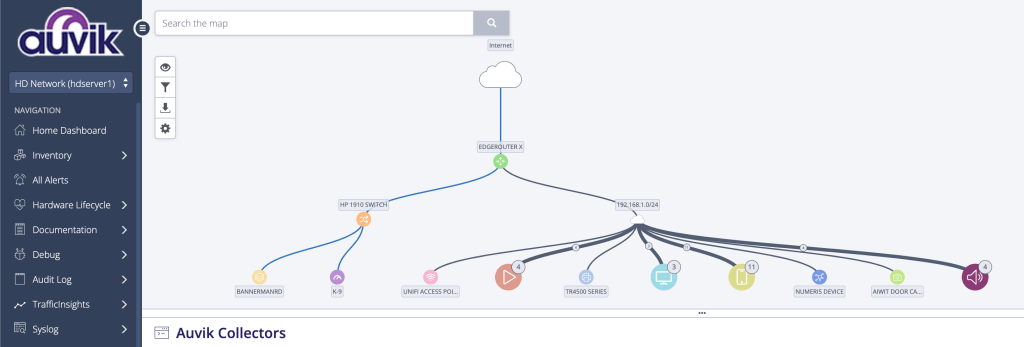
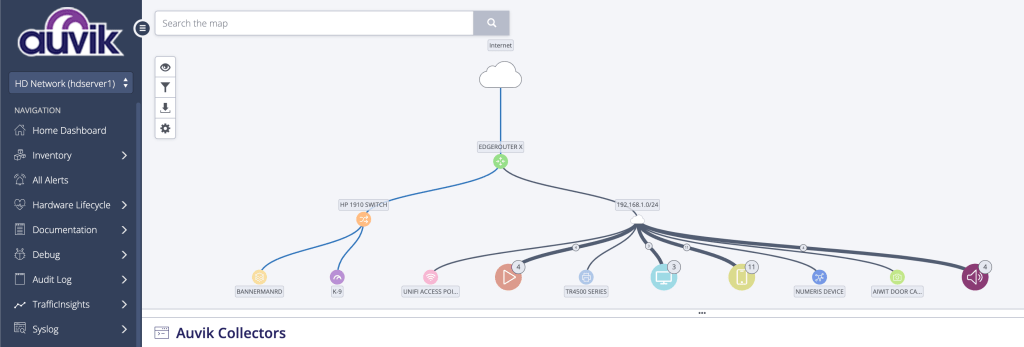
So on his advise, I got a new API key – I must have lost the original or mistyped it when I saved it. Boom, up came my Auvik site as it started to build the map.

That’s the three article epic of me, the technical writer, installing the Auvik Collector on an Ubuntu server.

Now that one interesting thing I learned about one of the devices I have on my network. Now most of the things I have are pretty normal… PCs, Laptops and Printers. A tonne of Roku TVs and gaming machines.

The interesting one – our video doorbell. That doesn’t sound interesting, I know, but I am a nerd. What I find interesting about it is that the Auvik network exposed that it isn’t connected all the time. In fact when you ring the doorbell, then it connects to the network and my phone.

I did say I was a nerd.

Setting up my Auvik Collector on an Ubuntu Server II

Blog | Technical Writer | Technical Analyst | Business Analyst | Admin Support Projects | Sample Documents | Home |

Part 2 – And now to Configure all the Bits…

So the last thing we did was reboot the Linux server. When it boots back up, we logged in and moved onto the next step to set it up to be an Auvik Collector.

The following commands will download and install the last three packages that we need to configure the server as the Collector.

sudo apt-get install snmpd
sudo apt-get install snmp-mibs-downloader
sudo apt-get install download-mibs

I think I missed in my last article mentioning that (if you are a real Linux beginner) prefacing commands with sudo allows you to run commands as a super user. So the actual command is apt-get install snmpd for example but because that will modify the Linux installation, you have to use sudo apt-get install snmpd which will then cause Linux to prompt you for the superuser password.

This is the more secure method of doing this rather than granting a regular user superuser status permanently.

Since Linux; if you have the server connected to an internet connection; pulls the latest version of packages, you don’t have to update each package you install in this manner.

Once this is done, it’s time to visit my old nemesis… Vi.

There are other editors that can edit conf files but Vi is what I learned on and learned to hate. I have a strange love/hate relationship with it.

So originally, you had to update the snmp.conf file to add +ALL to the file in an uncommented line. So I check it even though I know you don’t need to add that anymore.

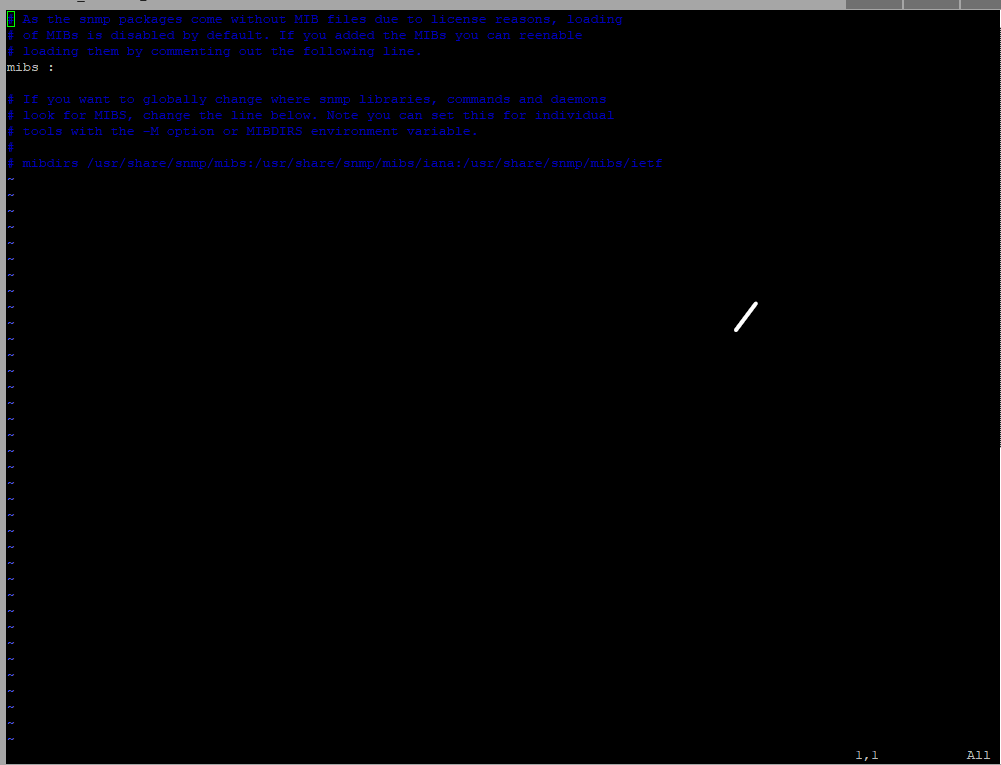
sudo vi /etc/snmp/snmp.conf

This will open the snmp.conf file. I am not sure if you actually need the sudo on this one, but I do it anyway and it doesn’t hurt.

This is what the file should look like unmodified. Next you will need to modify this file…

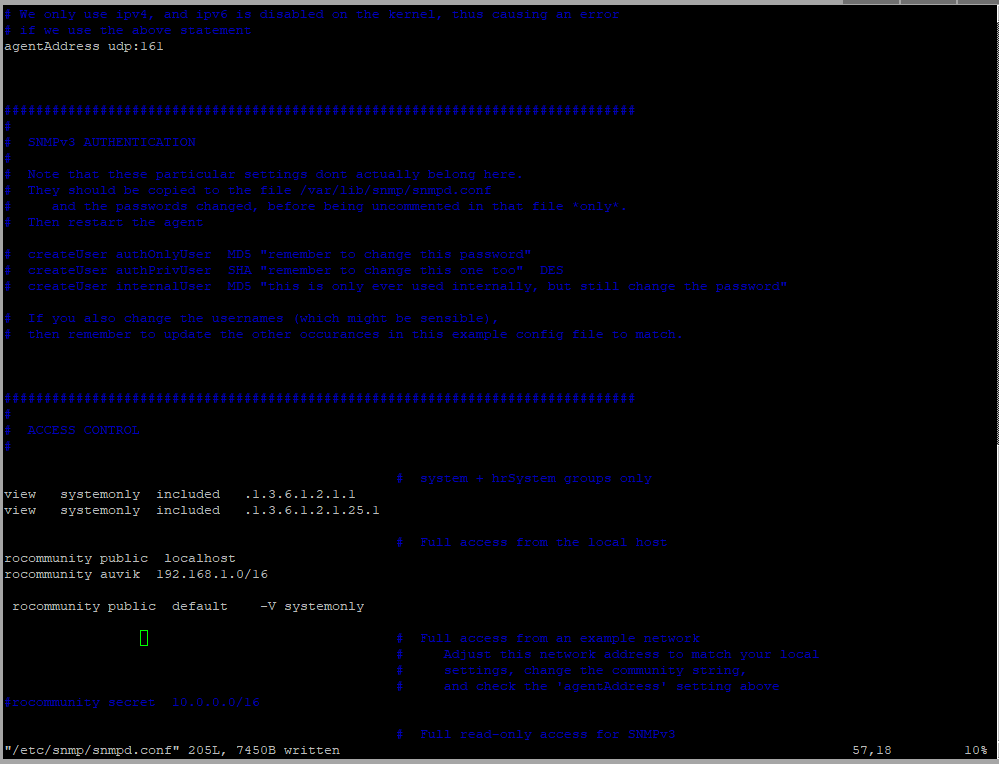
sudo vi /etc/snmp/snmpd.conf

When the file opens, you move your cursor down to the Agent Behaviour section. Most of the lines are commented out using #. To uncomment a line you remove the # but it isn’t just as simple as delete. No, this is why those of us who learned Windows first have such a hard time with Vi and Linux. Don’t get me wrong, given that these aren’t JUST text files it makes sense but it’s a pain in the arse when you are used to Windows.

I’m not going to teach Vi in this article, but if you don’t know and are interested here is a good article on it https://www.howtogeek.com/102468/a-beginners-guide-to-editing-text-files-with-vi/.

Back to modifying the snmpd.conf file, because of how my network is configured I didn’t need to specify an IP address for the agentAddress, so UDP:161 is sufficient.

Moving down to the Access Control section, add:

rocommunity auvik 192.168.1.0/16

This is the community string that I set up for the SNMP on my network.

Because openSSH server and client was installed in the initial installation of Ubuntu Server, it doesn’t have to be done here. Now it IS time to enable it.

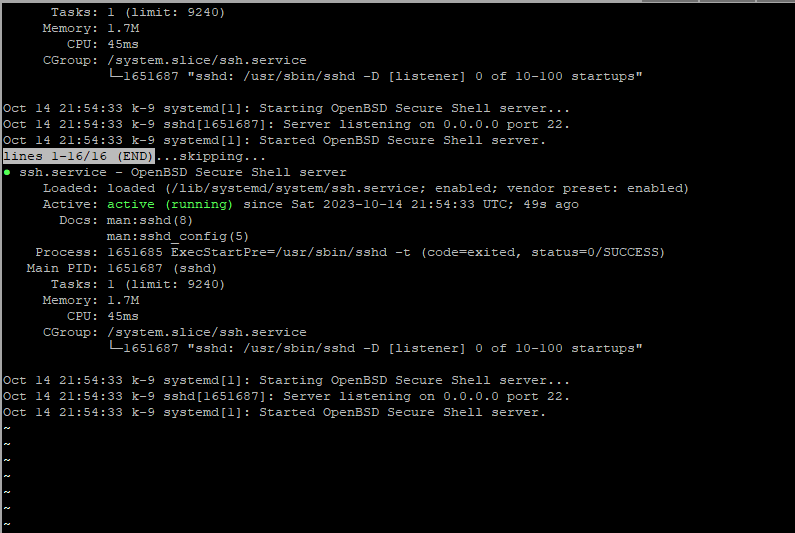
sudo systemctl enable ssh--now
sudo systemctl status ssh

Next step is to make sure that the needed ports are opened in the firewall.

sudo ufw allow ssh
sudo ufw status verbose

The final command shows all the open ports on the firewall.

That’s it for setting up the server itself. Next article will be about logging into the server using SSH, downloading the Auvik Software and setting it up. Along with the problems I had and the interesting things I found out by setting up Auvik.

Setting up my Auvik Collector on an Ubuntu Server

Blog | Technical Writer | Technical Analyst | Business Analyst | Admin Support Projects | Sample Documents | Home |

Part I – Unleash the Jellyfish!

To be clear, it took me a bit to do this.

First off, I’m not an expert in Linux. I used to manage a bunch of Linux servers (Solaris to be exact) when I worked for TELUS, but at heart my training has always been Microsoft and Windows which means I can set up a Windows server like it was second nature to me, Linux not as much.

Second off, I had two strokes in 2018. My Windows skills have not suffered but I was using them again literally the week after I got out of the hospital after the second stroke and had been working during the time between the first and second stroke building a database for a company.

To me that meant, I took this as a challenge. I got frustrated and put my first Auvik Collector up as a Windows box. The second time, I succeeded with my Ubuntu Server.

Let me tell you how I did it (and at the end of this, I’ll share some interesting things that having Auvik monitoring my network showed me about the networked equipment in my home).

Auvik is meant for commercial use. So most of the equipment it tracks is commercial networking equipment. Which is expected of most folk using or setting up Auvik – that it would be set up by a company to help administer their network and equipment. For me, it meant very little of my equipment is new. Exactly two pieces.

  • Ubiquiti Edgerouter X
  • Ubiquiti UniFi AP WiFI 6 Lite

Everything else is second hand. For my servers, because I had limited physical space and I have had good success with them I opted for a Lenovo Thinkcenter computer and since an Auvik Collector requires four threads, I specifically chose a Lenovo Thinkcenter M700; which has four cores.

So you know what the requirements for an Auvik Collector is:

  • 4 CPU threads
  • 8GB of memory
  • 2GB of free space

My house, which is also my office, has zero ability to run cables (mostly because I don’t own it and am pretty sure our landlord wouldn’t like me running lines in the drop ceiling – even though that is the norm) so other than where my ‘server room’ is (my living room), all the other equipment is connected via WiFi; which could explain why I bought a decent AP.

The other major piece of my ‘server room’ is a commercial quality but second hand switch. Specifically a HP 1910 switch which was recommended by one of my Auvik compatriots. I scored this for $20 dollars CDN plus shipping of $25. Mostly because unlike my servers, I couldn’t find one locally.

That’s the basic equipment that comprise my Auvik build, though the only piece that the Collector really cares about is the Thinkcenter M700.

Now let’s start with explaining how to set up Ubuntu Server 22.04 on my Thinkcenter M700 so that it has all the software installed to support being a collector.

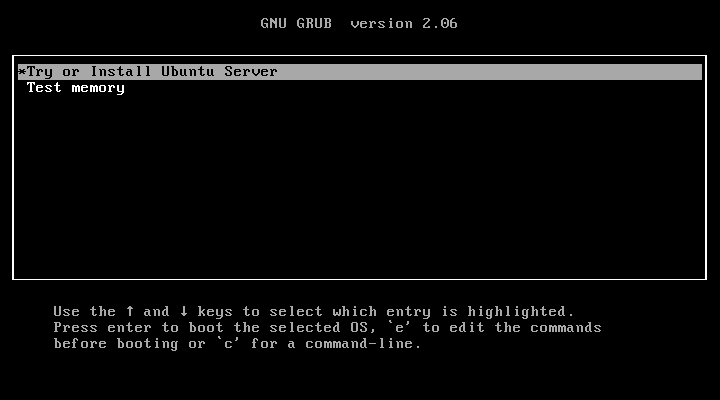
First download Ubuntu 22.04 (Jammy Jellyfish) Server 64 Bit and install it.

Install Ubuntu Server
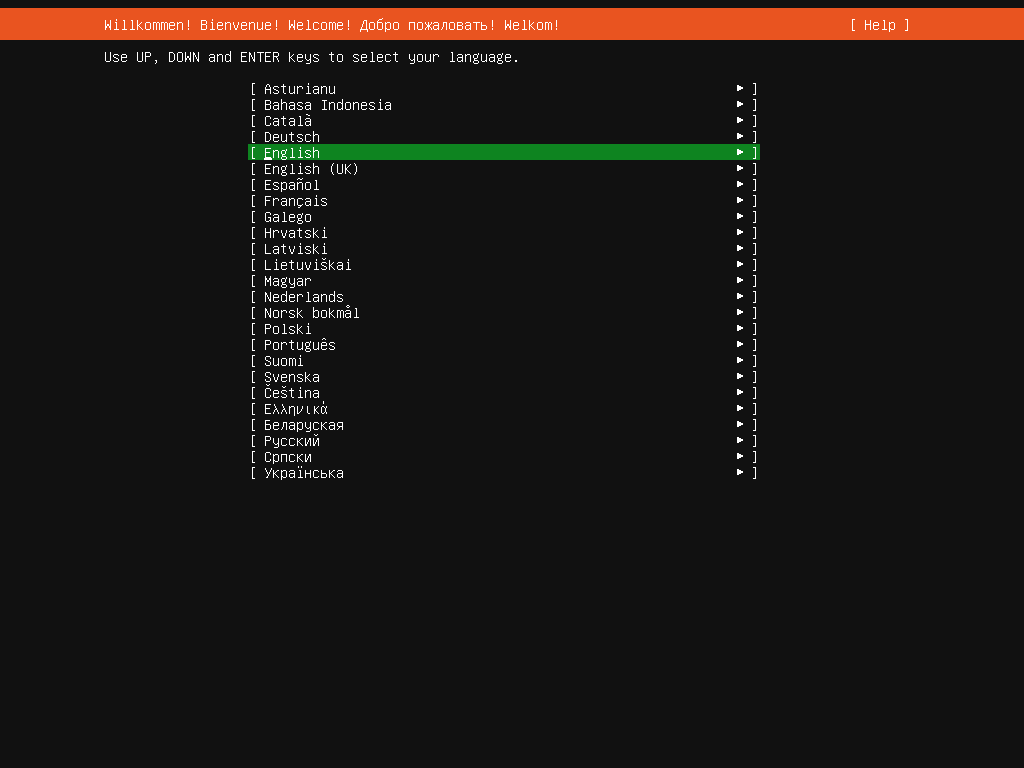
Select English as the language
Then English (US) for Keyboard and Variant
Select Ubuntu Server
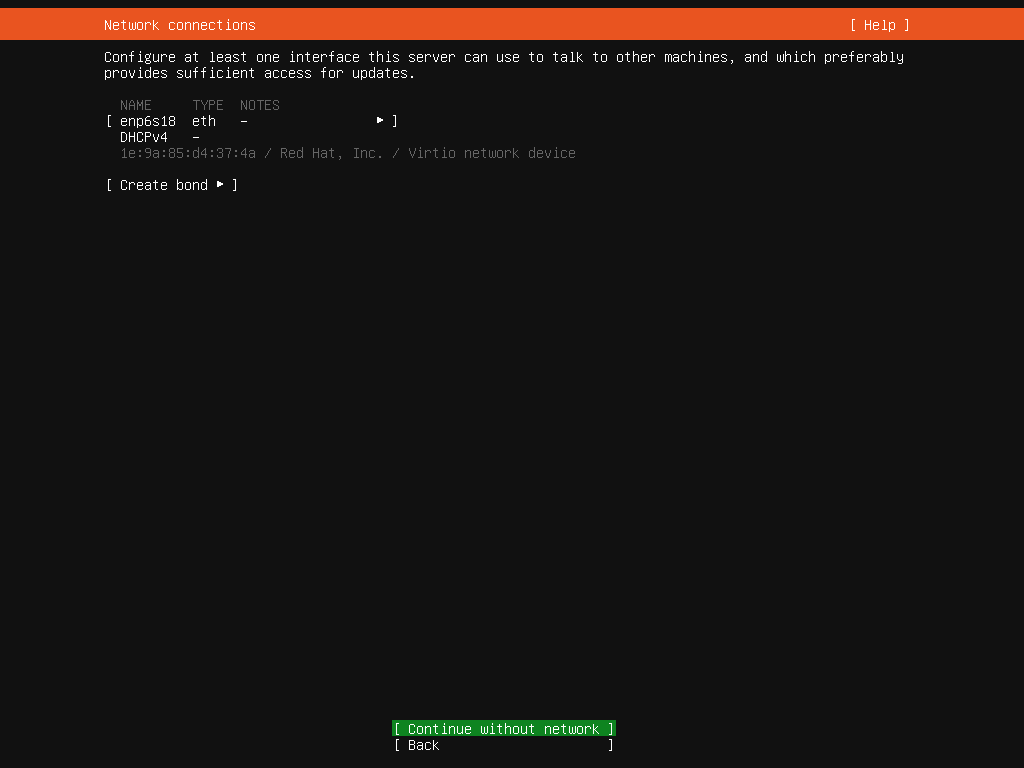
Click to check that it’s set with Automatic (DHCP)
Automatic (DHCP) for this network.
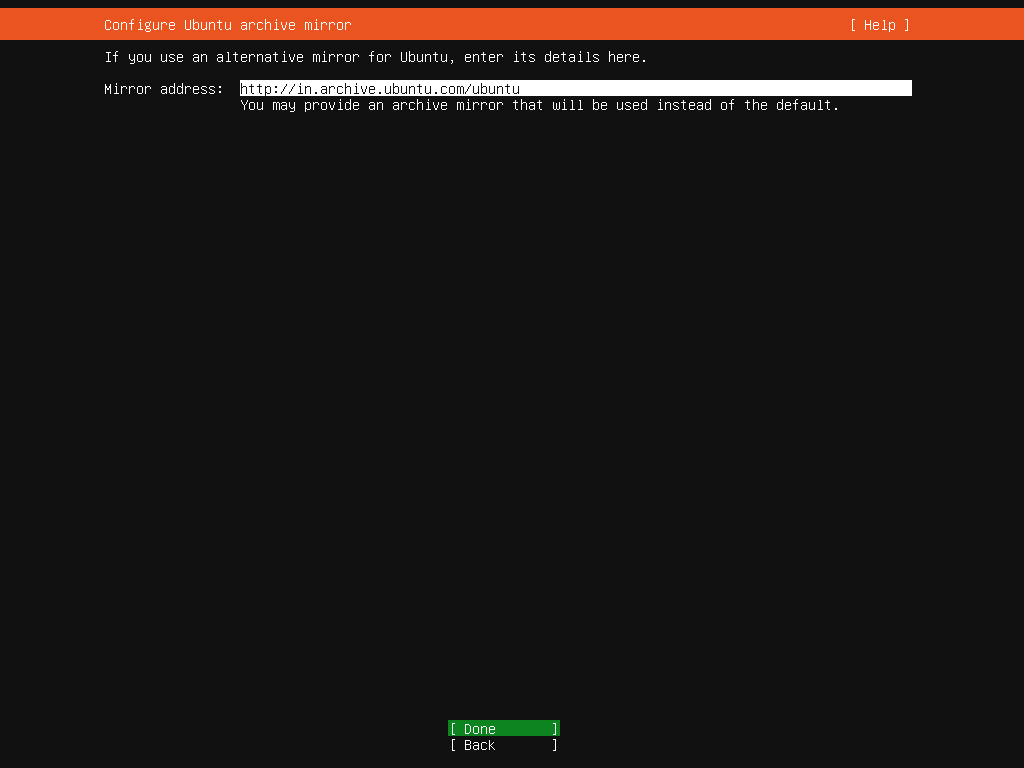
Done. No proxy to set.
Default mirror will work.
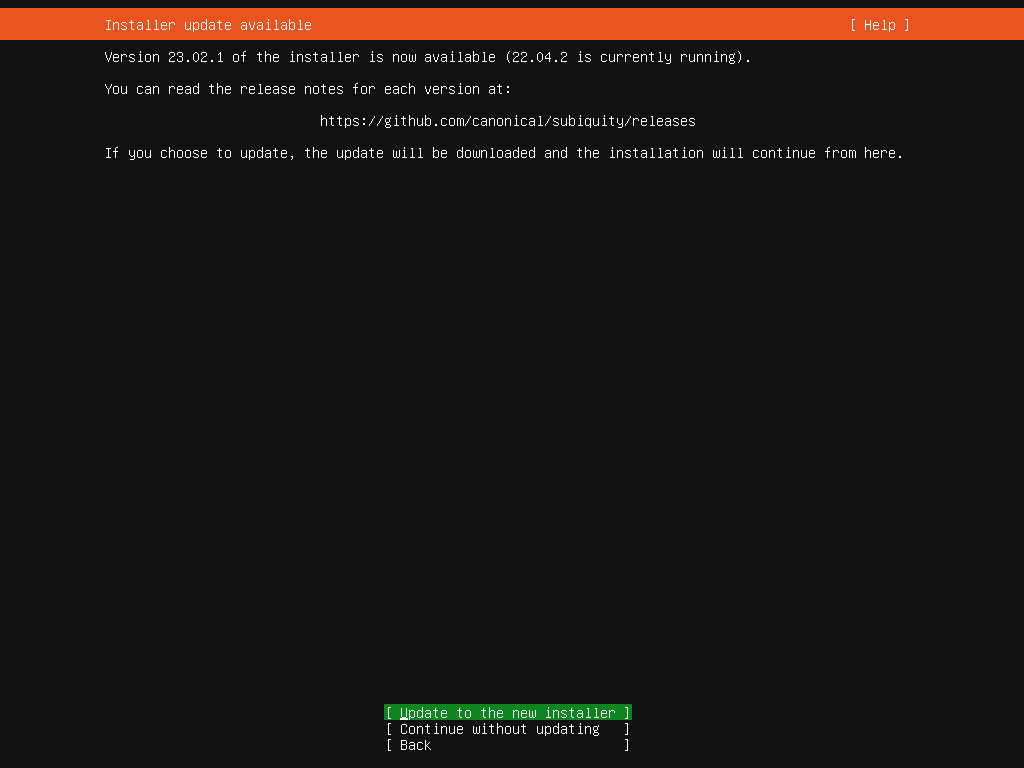
Continue without updating.
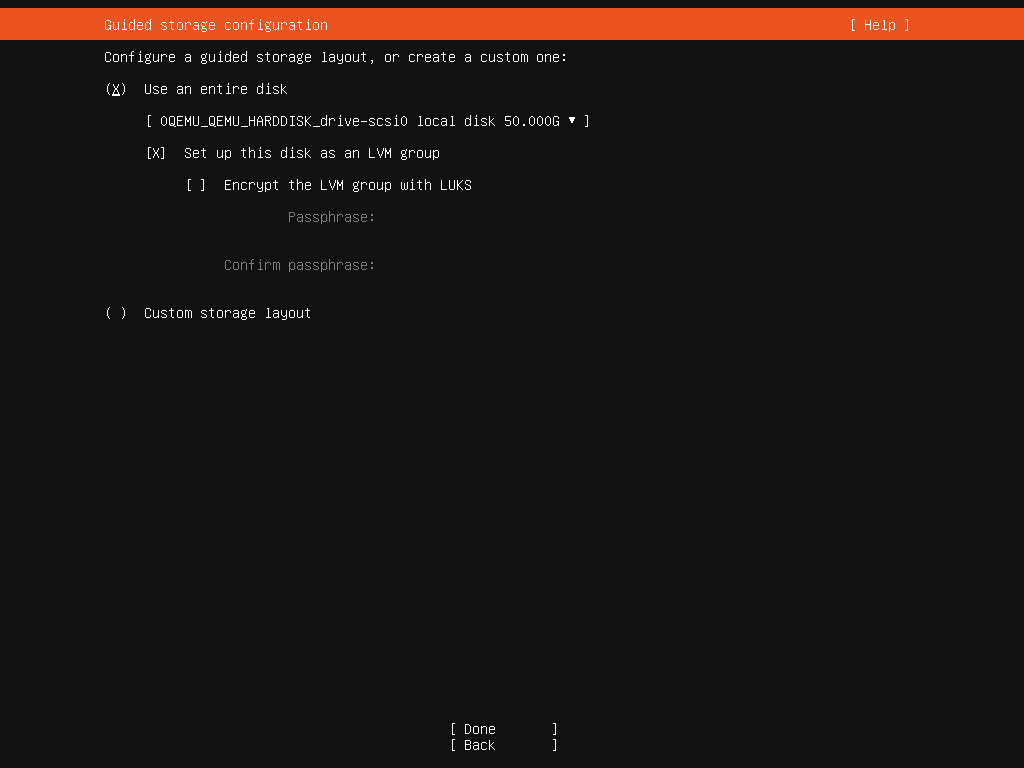
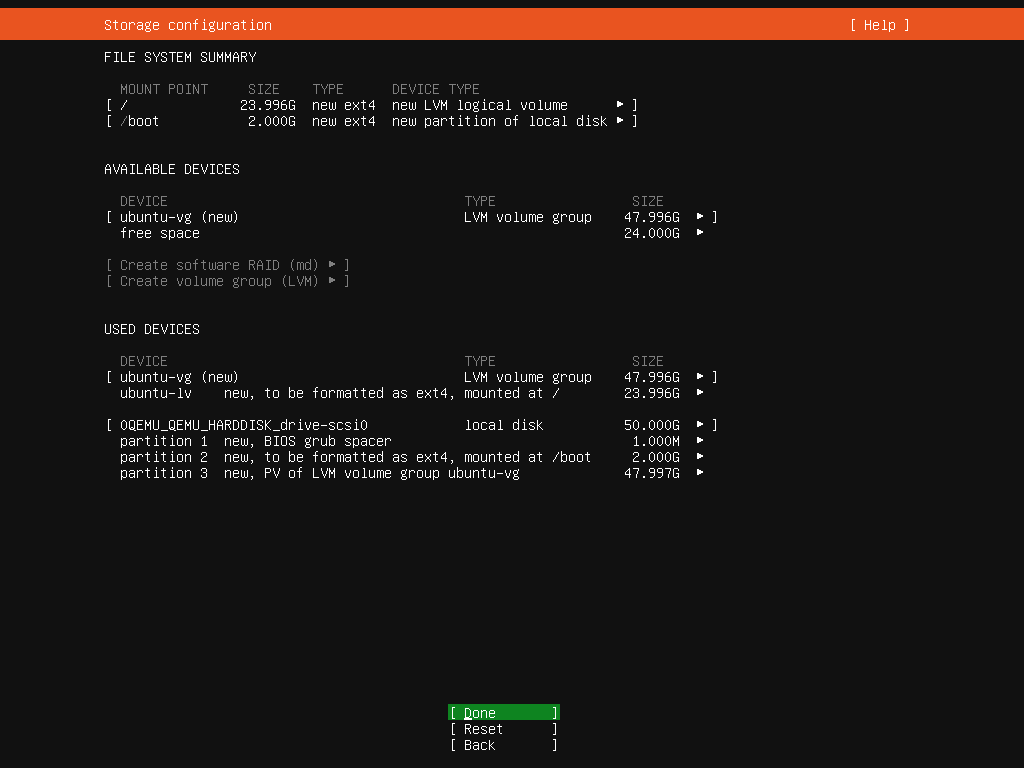
This is a small server with one purpose. Use the entire disk.
Configure the disk drive.
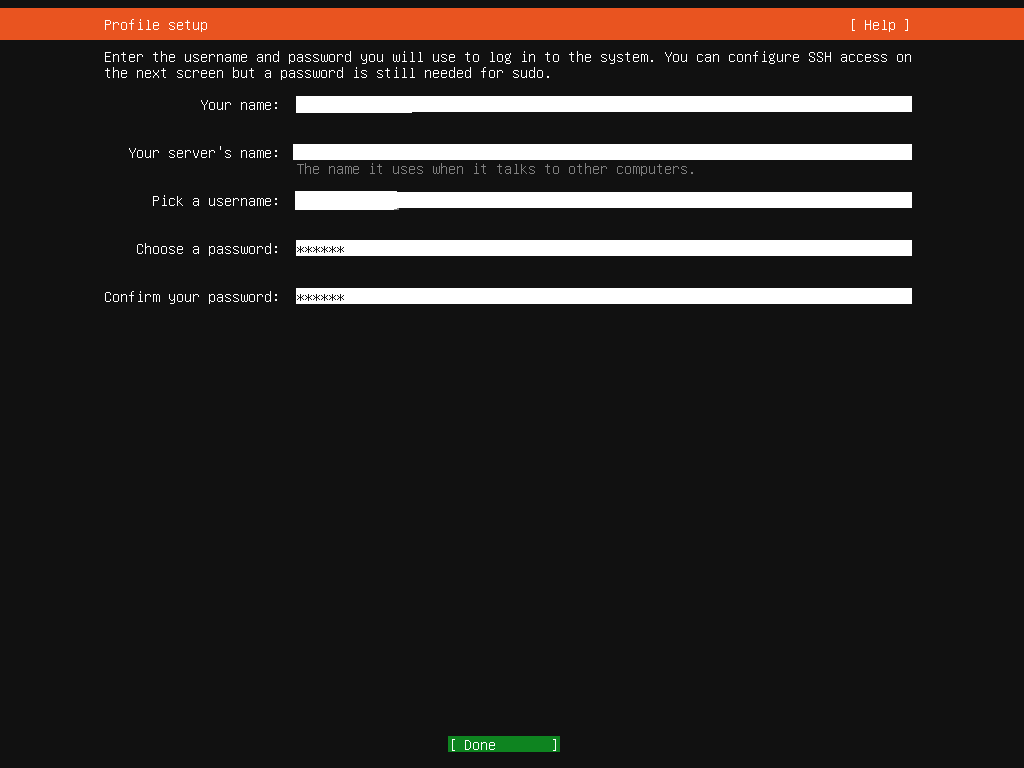
Set up your server name, username and password
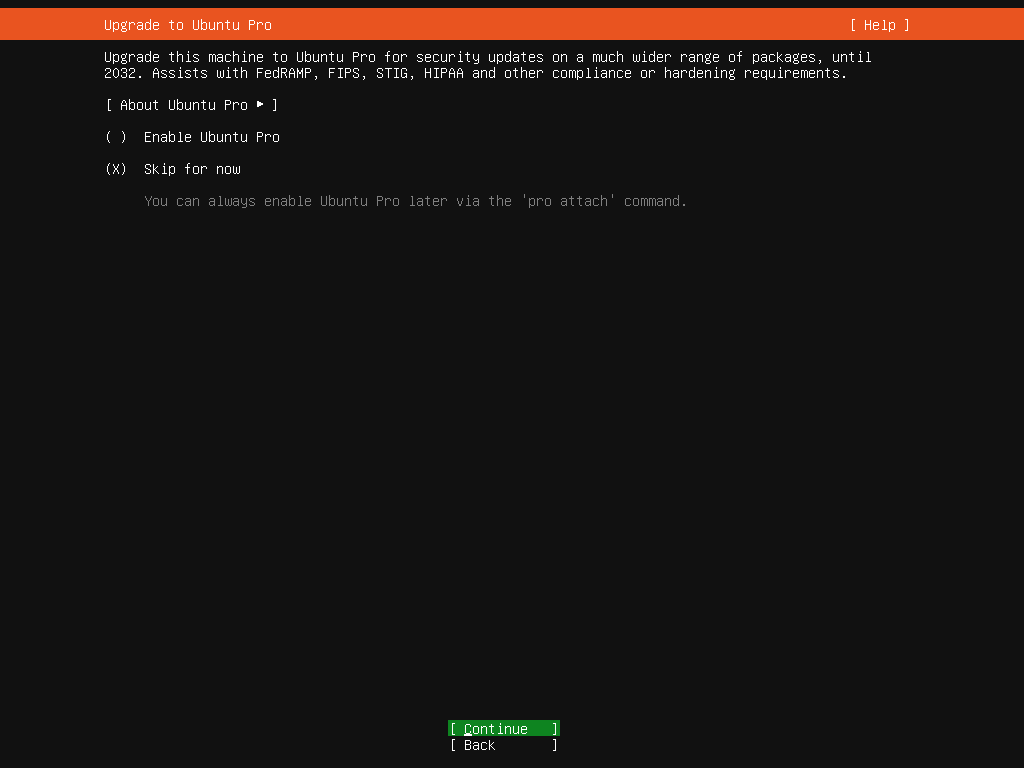
Skip Ubuntu Pro
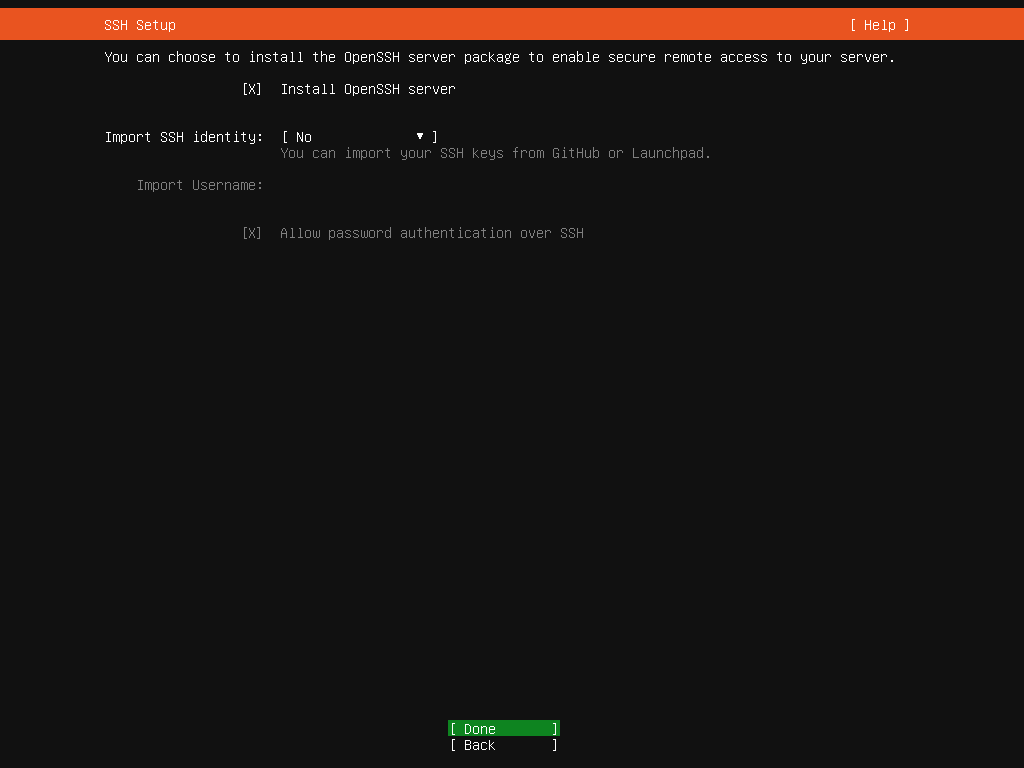
Install SSH
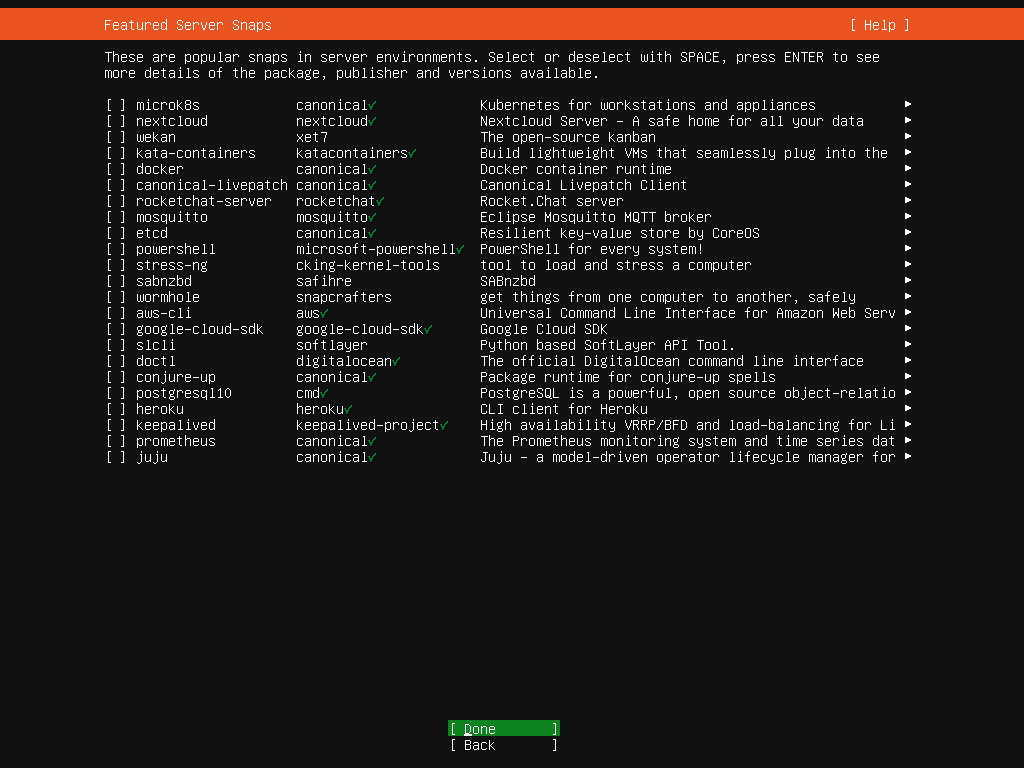
Select to install canonical-livepatch, etcd and powershell
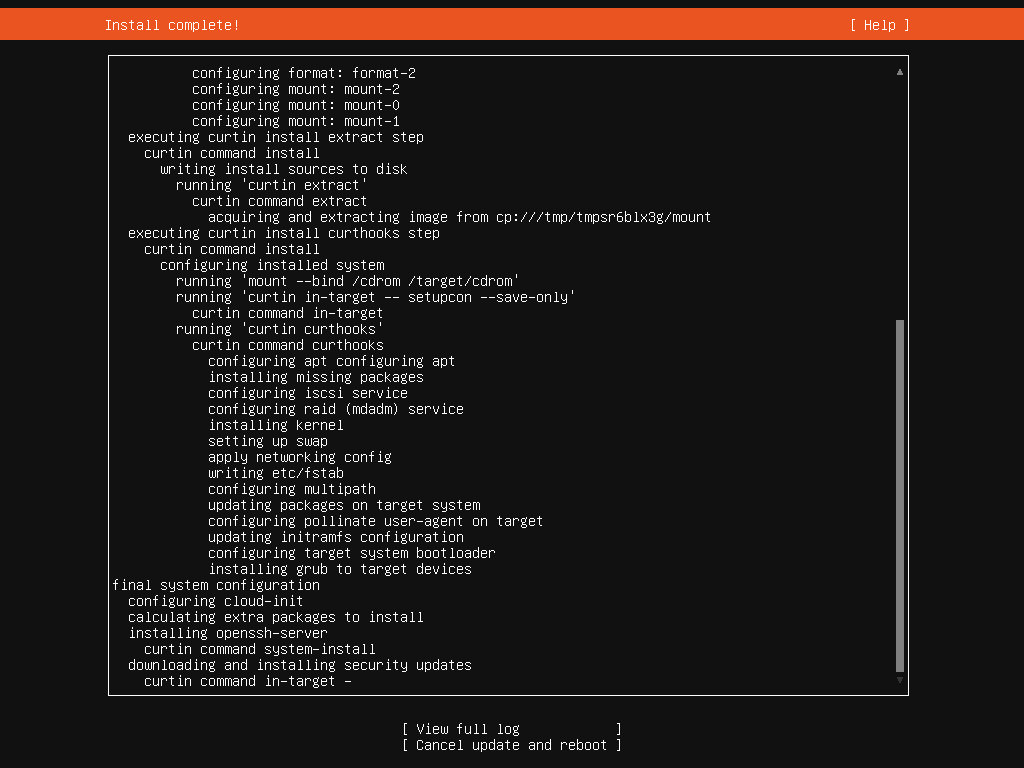
Unleash the Jellyfish!!! (Installing Ubuntu)
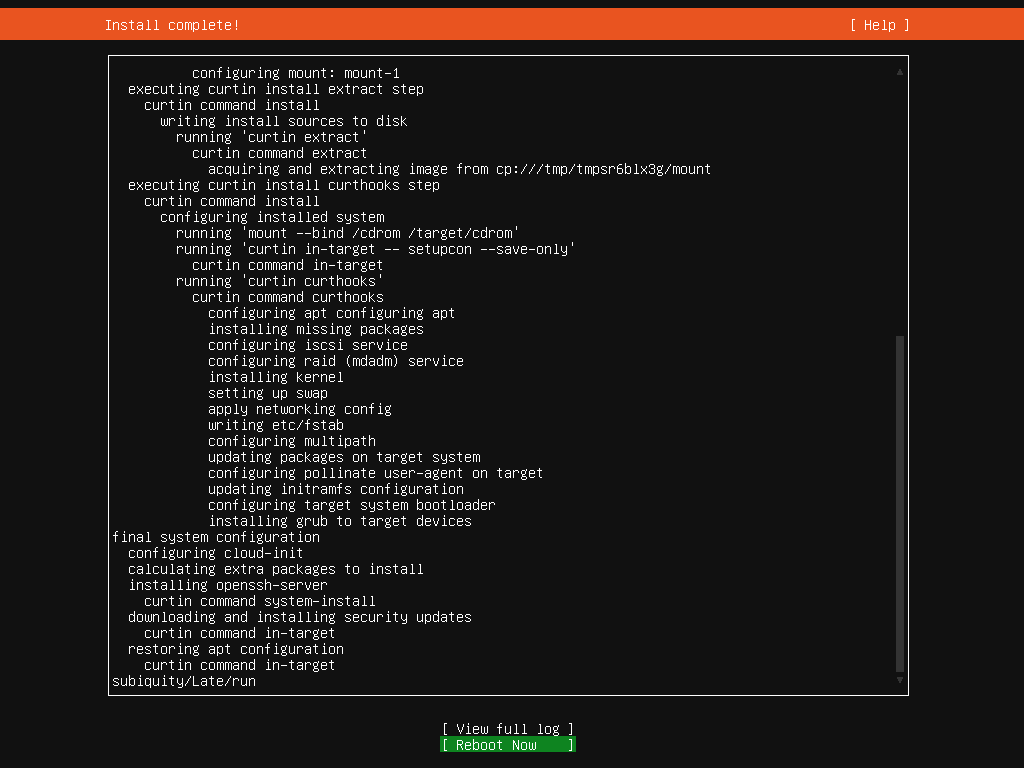
Reboot!

When it restarts, log in with the username and password you set.

Next step is to update Ubuntu:

sudo apt update
sudo apt full-upgrade

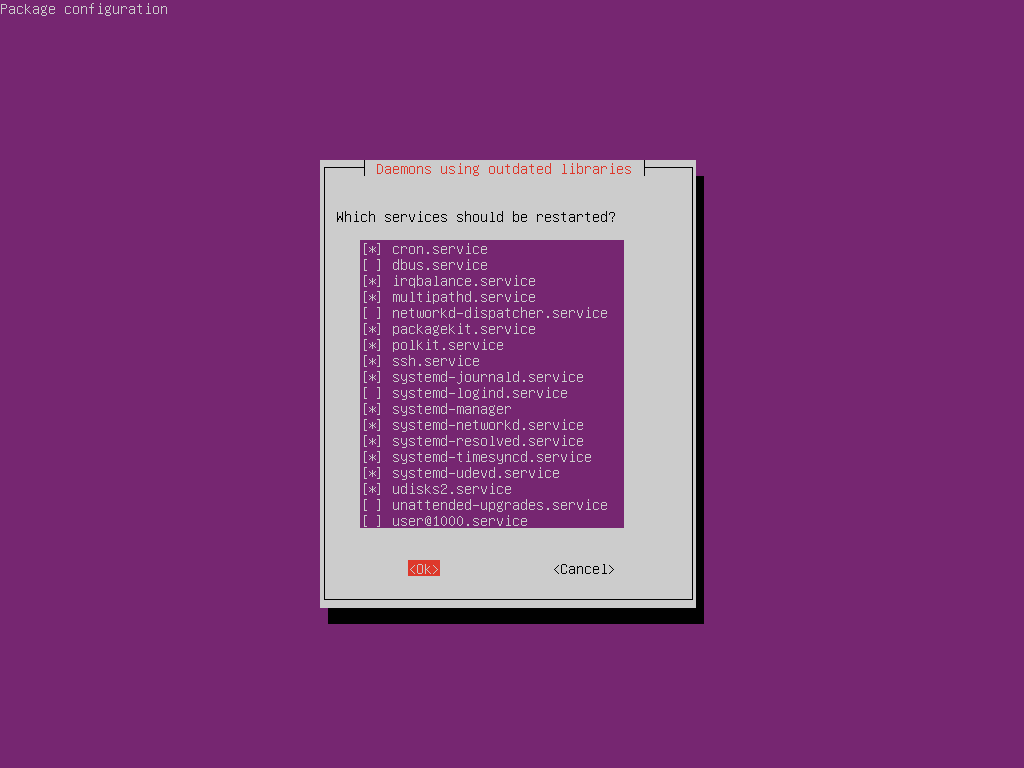
Some services will need to restart.

Now reboot the system again.

sudo reboot

Next time we’ll add and configure any additional packages that we need for the Auvik Collector to run.